Renew interior finishes from a sound, understood base rather than asking a new surface to hide the old problem.
Start with the existing condition
Identify existing layers, the reason for failure and the proposed product. Carpet, timber, vinyl, laminate and tile need different substrate and installation decisions. Ask about moisture, flatness, movement, underlay, doors and adjoining levels. A water-resistant product description does not establish that an entire floor or room can tolerate unresolved water below it.
Make the important interfaces clear
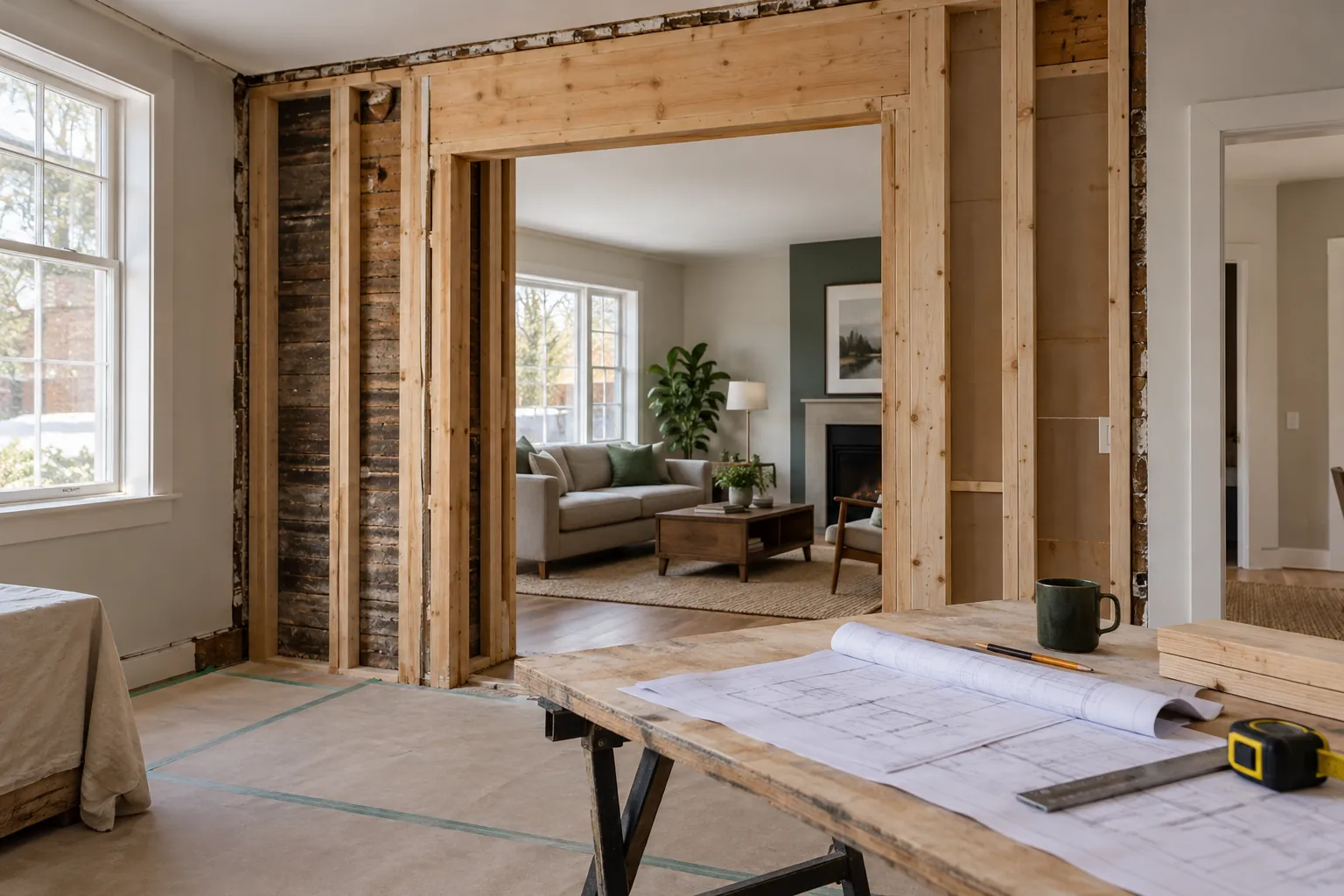
Removal can change the job. Older coverings, adhesives or textured finishes may need hazardous-material assessment before disturbance. A damaged wall can involve wet insulation or a specific assembly function; a broken stair tread can involve its support. Define containment, waste handling and the process for approving unexpected preparation rather than treating every concealed layer as ordinary demolition.
Leave a useful next step
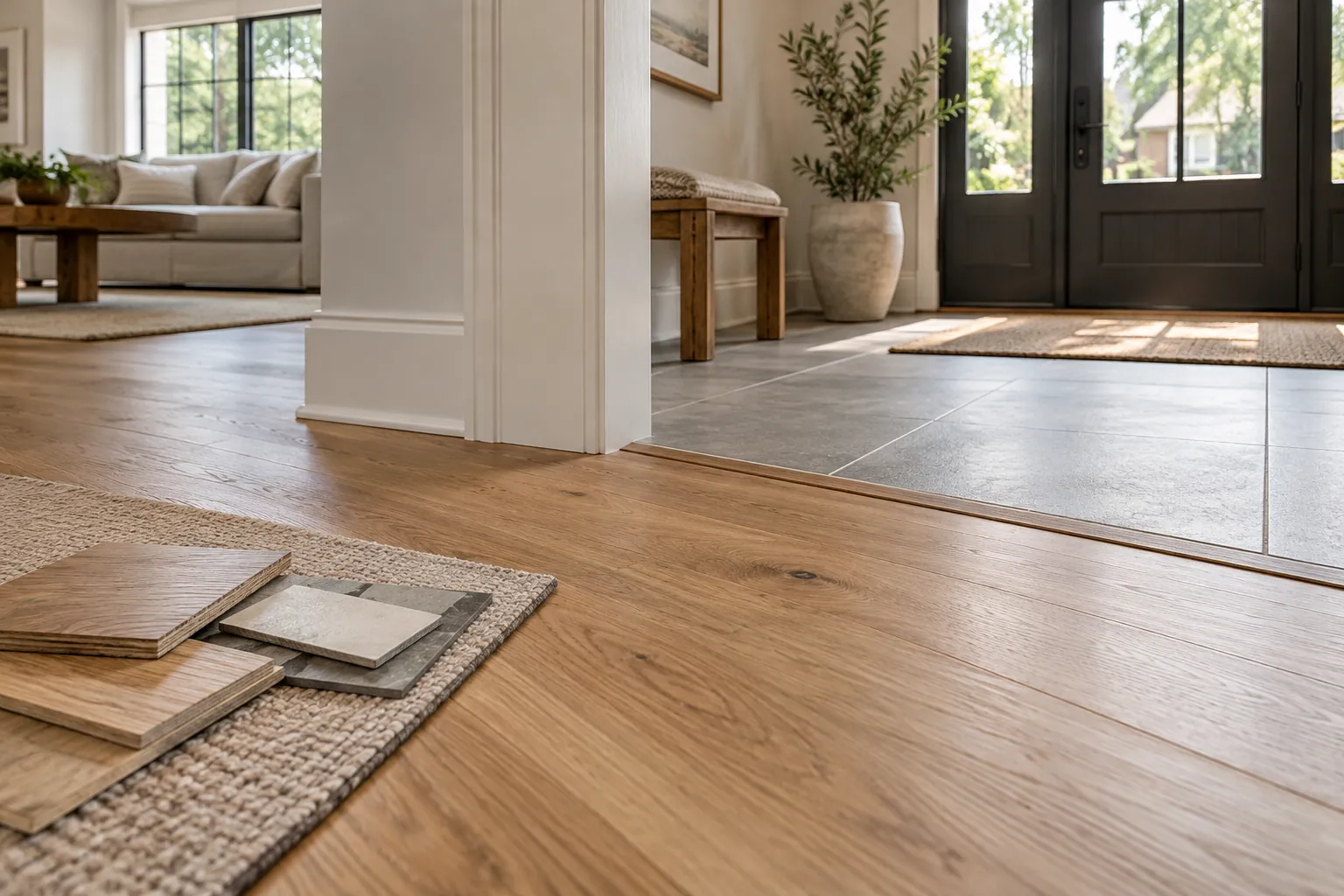
Set finish expectations while the room is still intact. Specify seams, pattern, nosings, trims, texture, paint and furniture movement, including what remains for another trade. The handover should record substrate readiness where relevant, the agreed transitions and product-specific curing or care guidance. If the retained surface is still useful, compare care or restoration first; if the goal is a new layout or capability, distinguish that improvement from replacing a failed finish.
Choose the next useful decision
Consider the room’s return to use as part of completion. Furniture movement, curing, coating restrictions and appliance reinstatement need clear responsibilities. Ask what should be checked before heavy items return, with product guidance specific to the selected finish rather than the old floor.
Details to bring into the conversation
- Assess moisture and movement
- Review older layers before disturbance
- Specify transitions and finish responsibilities