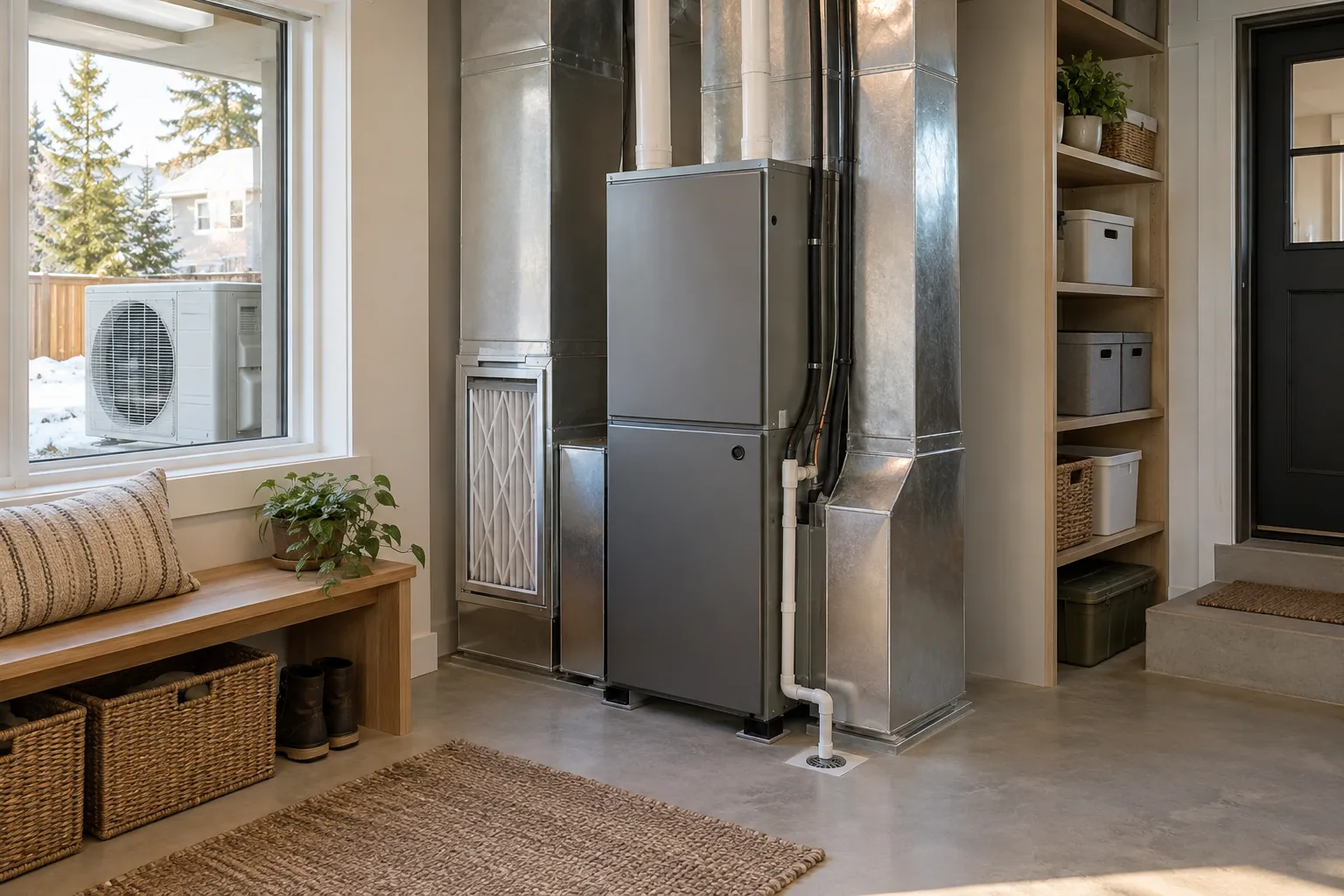
Renew essential equipment with the current home, its retained distribution and the final commissioning considered together. Compare a same-role replacement with any larger improvement as separate, understandable options.
Explain the operating need
Provide the existing heating, cooling or hot-water models, served areas and the actual failure or limitation. Include previous repairs and relevant changes to the home without assuming that age alone settles the decision. Ask the qualified provider which assessment supports replacement and how current demand or loads are reviewed. A new furnace, heat pump or water heater should be selected with connected utilities and service access in view, not only by copying a label or choosing a nominal capacity.
Coordinate the connected work
The appliance may be only one part of the proposal. Identify venting, condensate, electrical supply, fuel connection, water pipework, ducts and controls that remain or change. Ask which trades handle disconnection, removal, preparation and commissioning, and what documents the household receives. A heat pump’s backup strategy and a ventilator’s airflow settings deserve explicit questions. If new zones, fuel conversion or changed system capability is proposed, compare it as an Upgrading option alongside the renewal rather than quietly expanding the scope.
Hand over the system clearly
Review applicable operating checks, controls, labels and the limits of retained components. Keep the installed models and relevant work records together. Explain normal household operation and signs requiring professional attention without asking residents to perform specialist procedures. Maintaining can then plan care from the new manuals. This project should restore the failed equipment’s role and leave a traceable record; it should not imply a guaranteed saving, incentive or universal comfort result from equipment selection alone.
Make the coordinated brief useful
Ask the provider to explain any retained-system limitation in ordinary language. A new heat pump may still serve the same distribution, and a new water heater may leave another household hot-water issue unresolved. Those facts are useful rather than embarrassing: they help the household compare a future improvement with appropriate routine care. Keep equipment selection, connected work and applicable commissioning on the same proposal, with optional upgrades separated. This makes the renewal assessable and gives Maintaining the right starting record for the system actually installed.
- Describe the failure and served areas
- Review current needs
- List retained utilities and distribution
- Separate improvement alternatives
- Specify commissioning evidence
- Retain manuals and future care requirements