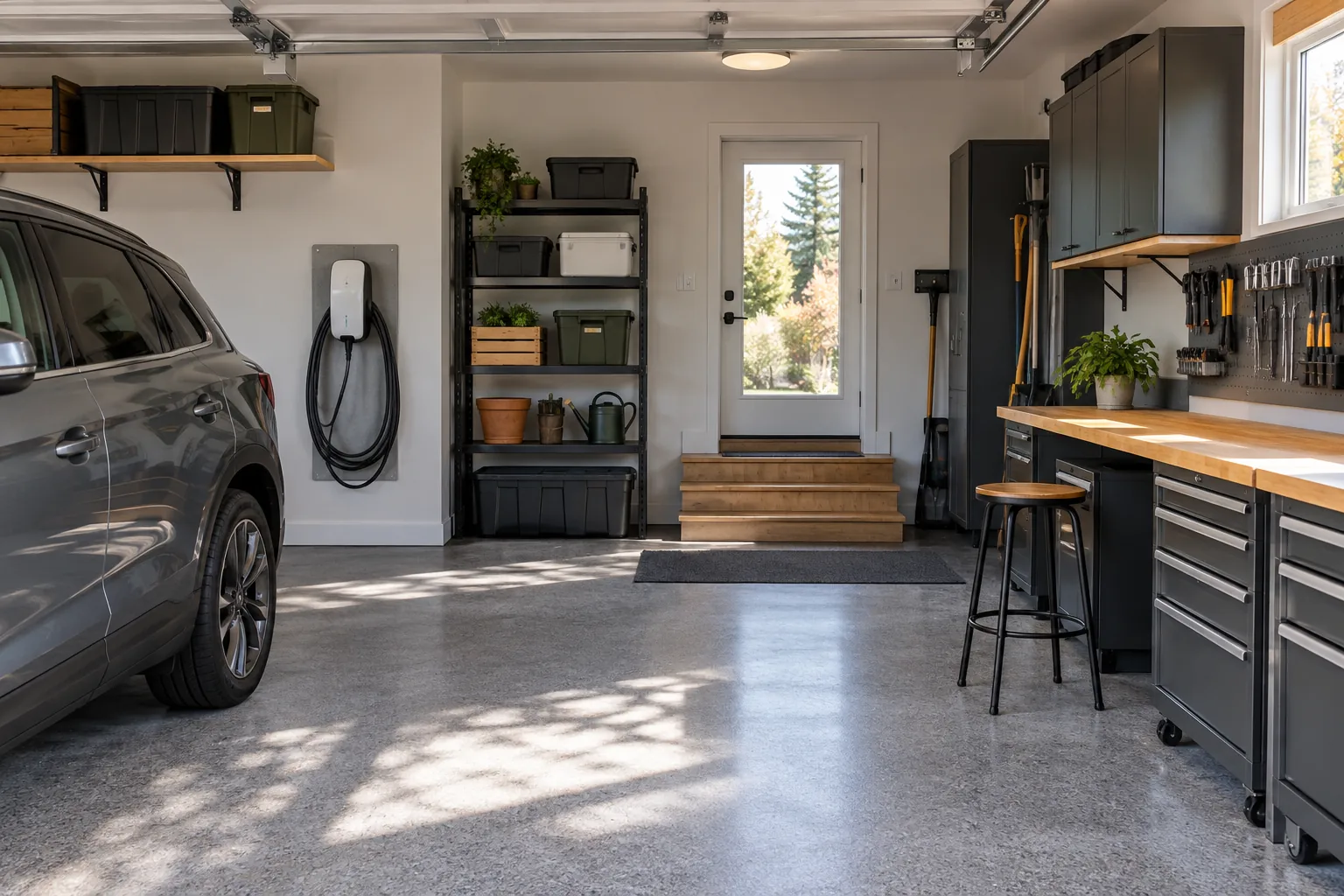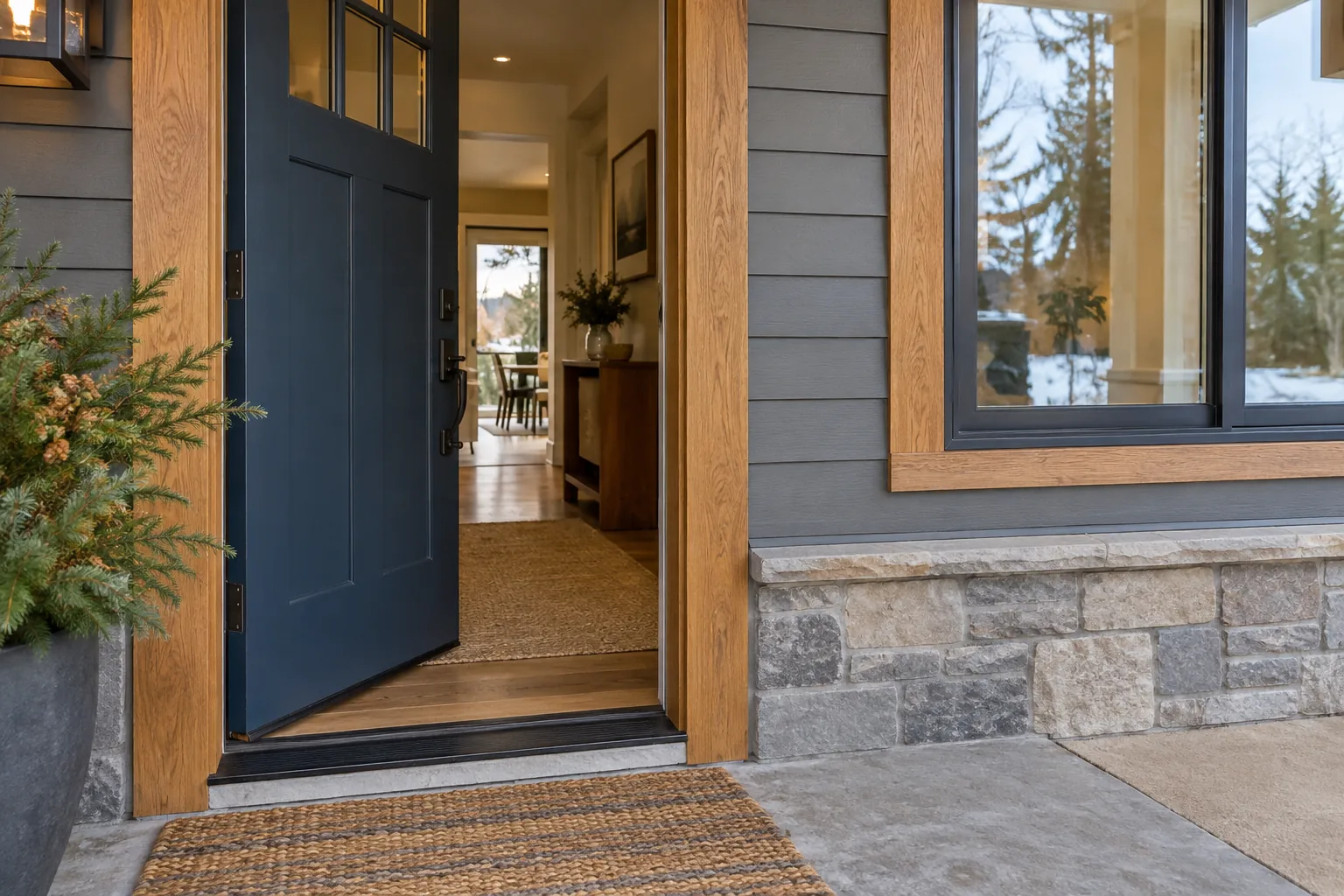
A replacement opening is successful when it fits, operates and meets the wall or roof-edge details around it properly.
Start with the existing condition
Decide which parts are failed and which can remain. Window glass, hardware, sash and full-frame replacement are different scopes. A door slab differs from a prehung assembly, and a garage opener differs from the door and counterbalance system. Ask the provider to identify the retained components and explain why they remain suitable for the new item.
Make the important interfaces clear
Water and support details deserve equal attention to colour and style. Photograph staining, damaged thresholds, distorted frames and poor drainage before ordering. Ask how sill support, weather barriers, flashings, seals and trim will be handled. A neatly operating product can still conceal damaged support or an unresolved leak if the preparation boundary is vague.
Leave a useful next step
Measure real everyday use as well as the hole in the wall. Include swing, handles, landing space, floor transitions and the route for removing large units. Garage-door springs and lifting hardware require professional work, while glazing and heavy doors need suitable handling. At handover, operate the new components together and retain product, care and applicable work records. Keep enlarged openings and changed access capability separate from ordinary renewal.
Choose the next useful decision
Retain photographs and product identification for each renewed opening. A future seal or hardware request should not depend on remembering which catalogue series was selected. Record whether the frame, threshold, glazing or supports were retained, and any limitation that influenced that decision.
Details to bring into the conversation
- Choose the right replacement boundary
- Investigate water and frame damage
- Review operation and transitions together